Film Review — The Echo Chamber
Eleanor Vance's <em>The Echo Chamber</em> doesn't just hold a mirror to our digital age; it shatters it, reflecting a fractured reality that demands careful assembly. Elias Thorne delivers a performance that will haunt you long after the credits roll.
There are films that capture a moment, and then there are films that define it. Eleanor Vance’s latest, The Echo Chamber, released just this week, doesn’t merely hold a mirror to our current digital anxieties; it shatters it, reflecting a fractured reality that demands careful assembly. It's a testament to Vance’s skill that what could have been a didactic lecture on misinformation instead becomes a deeply unsettling, character-driven psychological thriller.
I’ve always maintained that the most profound social commentary in cinema isn’t delivered from a soapbox, but through the crucible of individual experience. Here, Elias Thorne delivers a performance as journalist Arthur Hayes that will haunt you long after the credits roll. Hayes, a titan of investigative journalism renowned for exposing digital deceit, lives a life meticulously curated by algorithms – until a mysterious source, Clara Reed's enigmatic Lena, forces him to confront the very architecture of his perceived reality. The interactions between Thorne and Reed are electric, a slow-burn collision of conviction and disquieting truth that feels profoundly personal, even as it speaks to universal fears.
The Perils of Perception
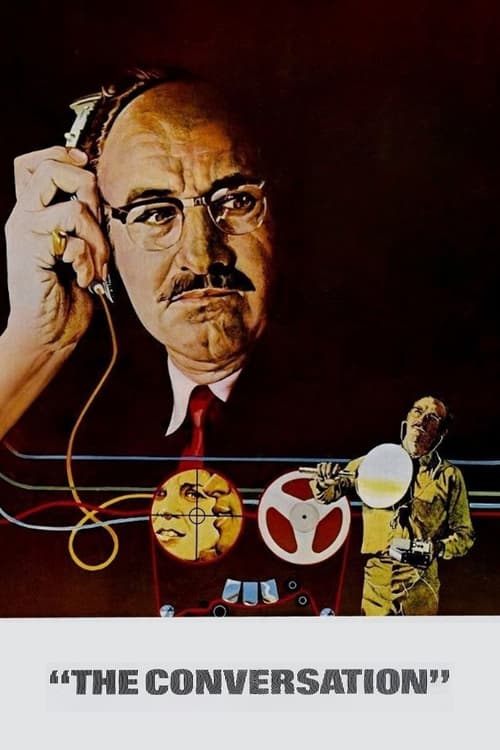
What Vance understands, and what she masterfully exploits, is the insidious nature of confirmation bias magnified by modern tech. Hayes believes he's the arbiter of truth, the one pulling back the curtain, yet he's blind to the algorithms shaping his own worldview. This isn’t new territory for cinema; one thinks immediately of Francis Ford Coppola's The Conversation (1974), where surveillance expert Harry Caul becomes ensnared by the very tools of his trade. But Vance updates this premise with a chilling contemporary relevance. Her film explores not just what we hear, but what we choose to believe, and how easily that choice can be manipulated by unseen forces. The tension isn't just external; it's the internal collapse of a man whose identity is built on a foundation of certainty.
Tommy Morgan, our resident tech alchemist here at Cinema Dialogue, has often pointed out the fine line between curating information and constructing a silo. The Echo Chamber renders this visually. Cinematographer Anya Sharma uses distorted reflections and an almost constant subtle visual static, not unlike the early experiments in found footage, to create a sense of unease. The clean lines of Hayes’ apartment slowly give way to visual noise, mimicking the fracturing of his mind. It’s a subtle yet profound commentary on how our digital environments reshape our physical and psychological spaces.
A Masterclass in Character Unraveling
The core of the film’s power lies in Hayes's unraveling. Thorne, who has shown remarkable range in recent years, delves deep into the paranoia and self-doubt required for such a role. His initial bravado, almost an arrogance in his intellectual superiority, gives way to a raw vulnerability. He’s not merely reacting to plot twists; he’s experiencing a profound existential crisis. His interactions with Lena are pivotal. Reed’s performance is a tightly wound spring, ambiguous and compelling, acting as both a catalyst and a mirror for Hayes's internal turmoil. She’s the external force that exposes the internal void, pushing him to question everything he’s ever "known."
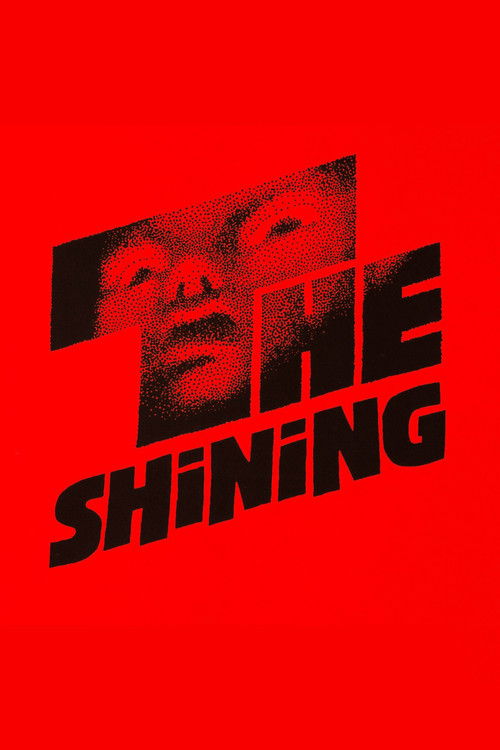
This kind of meticulous character development, where every scene peels back another layer of the protagonist's psyche, is what separates truly great drama from mere storytelling. It calls to mind the slow-burn psychological descent of Jack Nicholson in Stanley Kubrick’s The Shining (1980), though here the horror is not supernatural but deeply human and technologically amplified. Vance ensures that even as the narrative tightens its grip, the focus remains firmly on Hayes's losing battle with his own curated reality.
The Verdict: A Chilling Reality Check
The Echo Chamber is more than just a timely film; it’s a vital one. It poses uncomfortable questions about the nature of truth in an age saturated with information, and it does so with an artistic precision that demands attention. Eleanor Vance has delivered a film that is both intellectually stimulating and viscerally unsettling, cementing her reputation as one of the most astute observers of the human condition in the digital age. Go see it. It might just make you question the next headline you read.
