
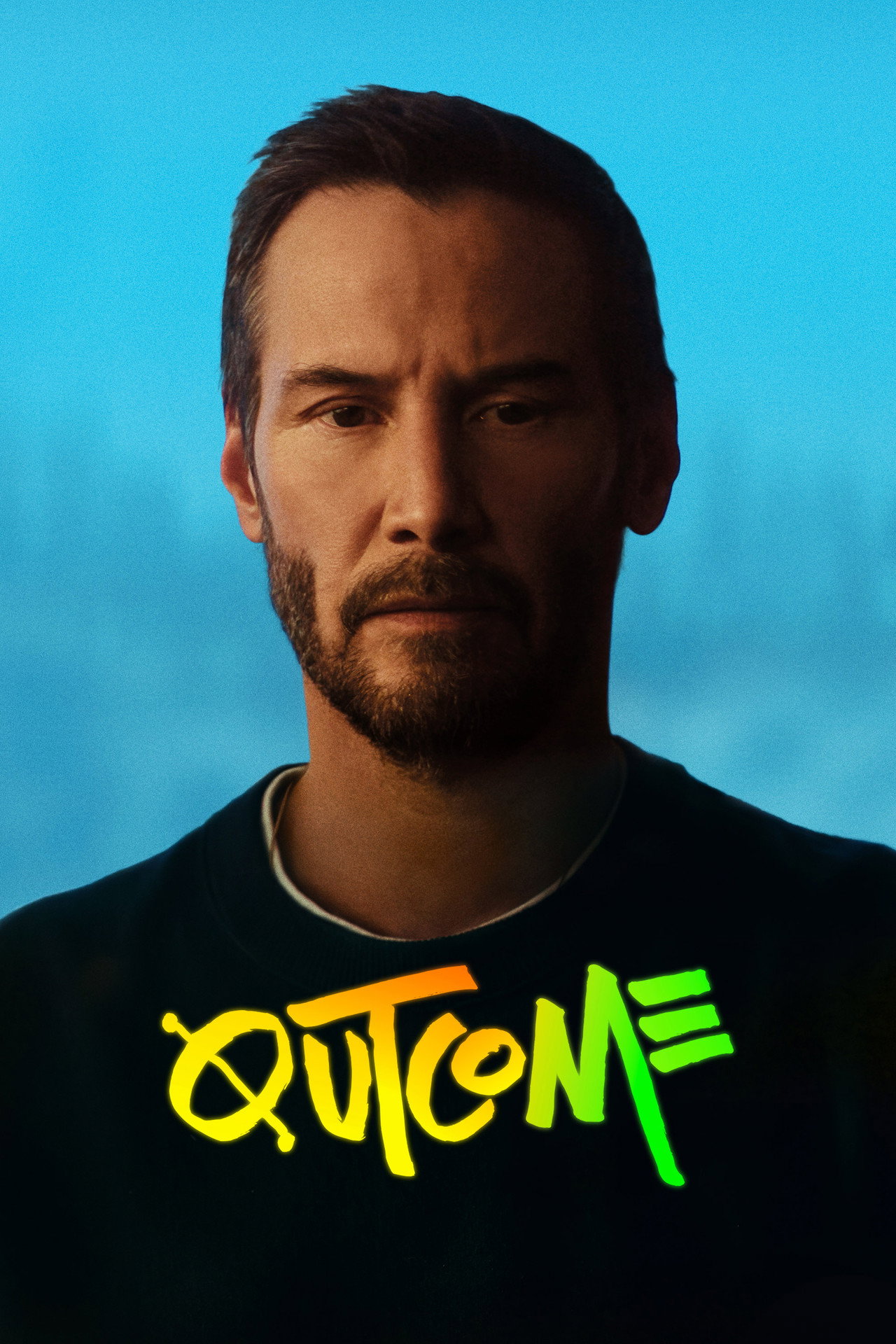
A Premise Without Purchase
The setup is the kind of thing that ought to work on paper: a Hollywood bigwig forced to reckon with his past. It's the sort of industry-navel-gazing story that gives actors and directors a rich sandbox — shame, complicity, the distance between who you were and what you've become. Outcome has the cast to sell it and the structural bones to let it breathe.
And yet from the first ten minutes, nothing lands. There's no opening hook, no scene that tells you why you're here or what the stakes are supposed to be. The camera drifts, the conversations meander, and you find yourself waiting for the movie to start even as it keeps insisting it already has. The problem isn't that the premise is flawed — it's that the execution refuses to give the audience a reason to invest.
Keanu Reeves, Unmoored
It's hard to watch Keanu Reeves lose his way onscreen. He's typically so magnetic — compelling even when he's just, well, being Keanu — that seeing him adrift here is genuinely jarring. None of his usual kinetic physicality shows up. None of the stoic grace we've come to rely on in John Wick or The Matrix or even the quieter registers of Destination Wedding.
What's onscreen instead feels like an actor trying to shake off every expectation his audience brings with them — and not successfully. You can almost see him searching for the performance, for a tempo, for something to hold onto. It's a brave impulse in theory. In practice it reads as vacancy. Reeves is an actor whose stillness has always been the opposite of passivity; here the stillness doesn't register as anything at all.
Jonah Hill's Self-Aware Misstep
I'm usually here to champion performances — to dig into why an actor made a particular choice and what it unlocks. Jonah Hill as the jaded industry insider is the opposite of that kind of performance. It's a cliche played at performative arm's length, the kind of cynical, self-aware turn that spends its energy letting you know it's above the material.
That's a posture that never flies. When a performer tells you they're smarter than the movie they're in, the audience is the last party to find it charming — we're the ones who bought the ticket. Tommy called this the “Ozempic version of Jonah Hill,” and the shorthand fits: there's a performative disconnect between the actor we've watched evolve (Moneyball, The Wolf of Wall Street, Mid90s) and the mannered emptiness onscreen here. I'm all for actors pushing boundaries and transforming. This doesn't read as transformation; it reads as armor.
Where the Script Fails Everyone
Underneath both lead performances is a screenplay that doesn't give either of them anything to play. The Hollywood-reckoning beats arrive on schedule without ever earning their weight. Conversations that ought to crackle instead glaze over. Scenes end before they clarify anything, or drag past the point they made. You can feel the shape of the movie the writers wanted — something moody, introspective, a little savage — but the script keeps handing the actors lines that sound like placeholders for better ones.
In a better draft, Reeves's unmooring would be the point. Hill's cynicism would be the antagonist to that unmooring. There's a version of Outcome where those two performances bounce off each other like a live wire. None of that tension makes it to the screen. The film keeps the ingredients on the counter and never turns on the stove.
Verdict: Skip This One
I walked out mentally at the nine-minute mark, and nothing in what I skimmed past that point pulled me back. A waste of talent, a waste of an interesting premise, and — given who's in it — a waste of what could have been an actual conversation piece this year. Put Outcome aside. Watch John Wick: Chapter 4 again. Watch Mid90s again. The people who made this film have done far better work, and you'll be reminded of that the moment you're back in it.

![Outlander: Seasons 1–5 [Blu-ray]](https://m.media-amazon.com/images/I/71tlWlGdBpL._SL1001_.jpg)