A Thousand Years of Television
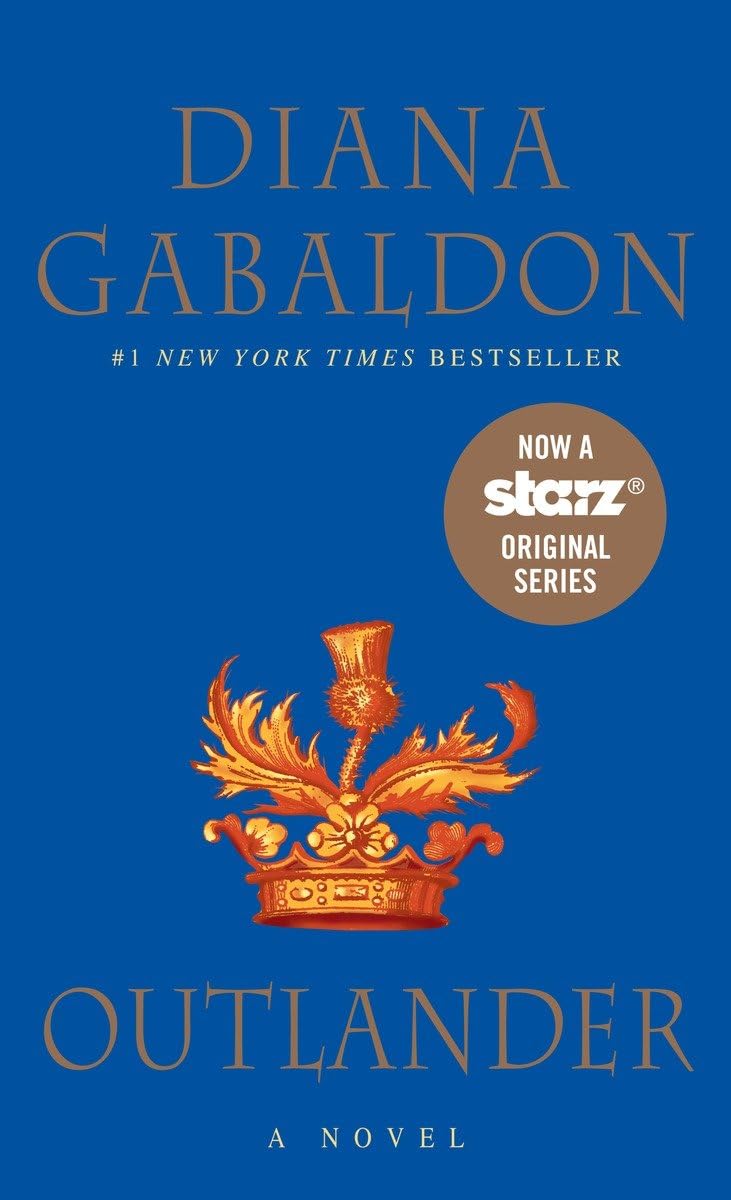
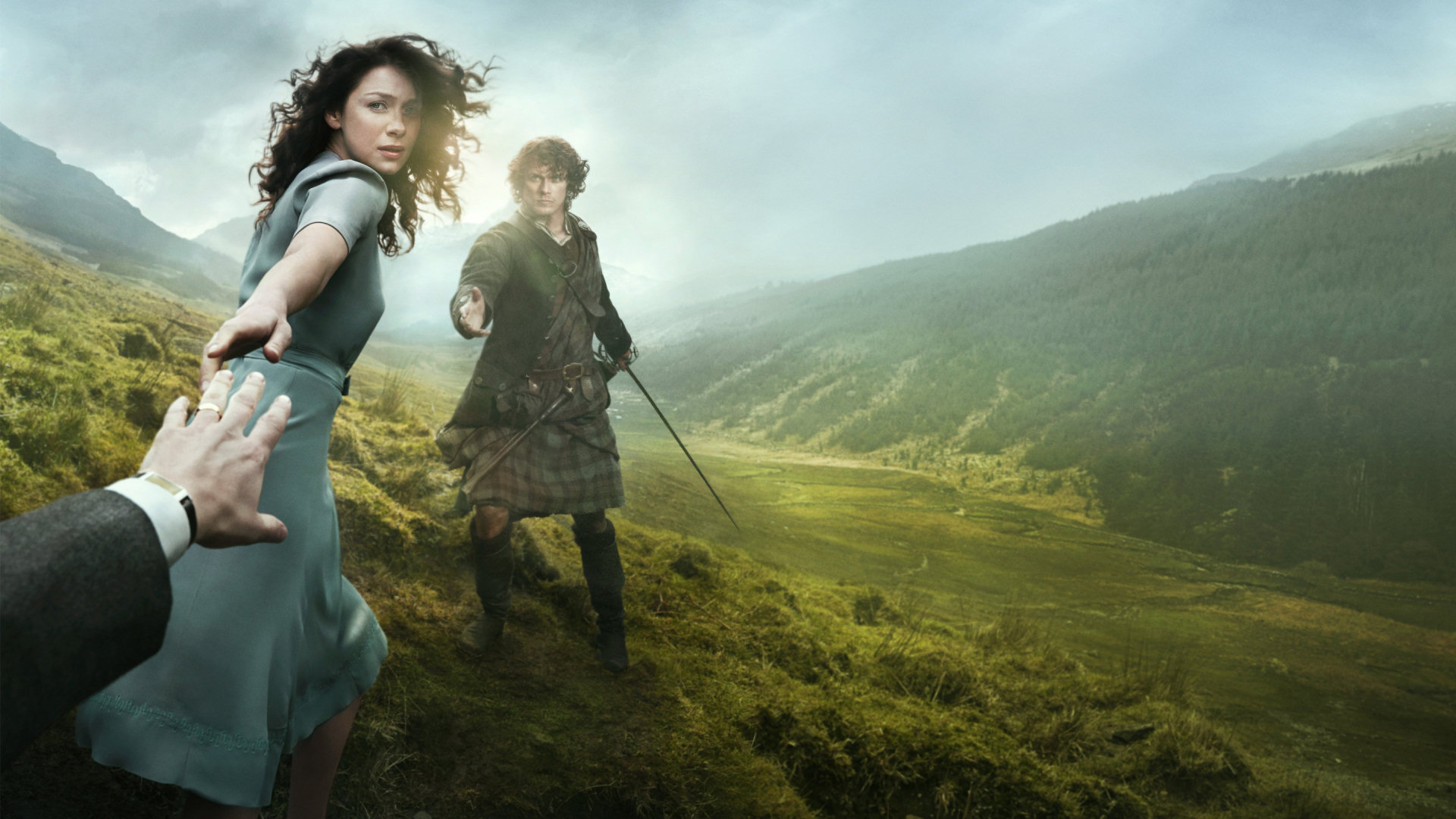
There is a Christina Perri song — written for a different love story, a different kind of eternal — whose lyric cuts straight to the heart of what Outlander has always been: "I have loved you for a thousand years / I'll love you for a thousand more." You could drop that line anywhere in Diana Gabaldon's nine-novel saga and it would land. Claire Beauchamp Randall — WWII nurse, time traveler, surgeon of the 18th century — touches the stones at Craigh na Dun and falls two hundred years into the arms of a man she was never supposed to meet. What follows is not a romance novel. It is an argument, conducted across centuries, that some connections exist outside of time itself.
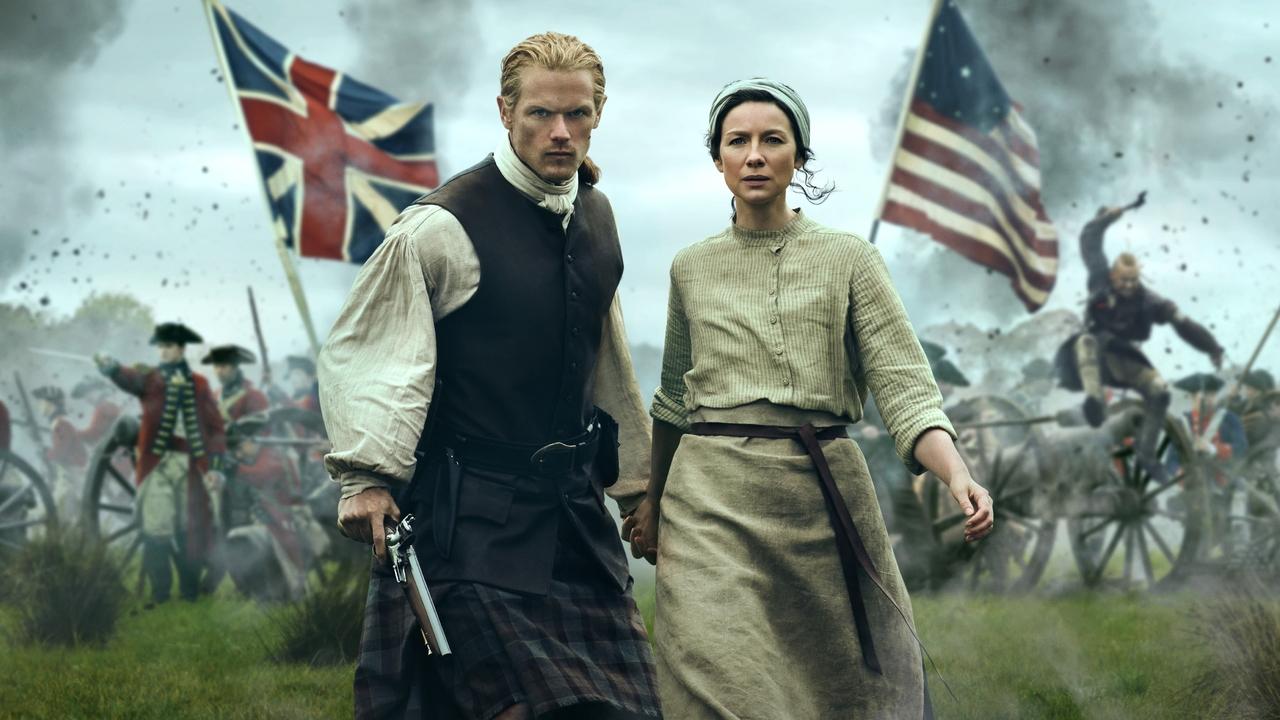
Season 8 opens with a book. Not just any book — a biography of the American Revolution authored by Frank Randall, Claire's first husband, the man she left behind in 1945. The book, titled The Soul of a Rebel, contains fourteen references to one James Alexander Malcolm MacKenzie Fraser. And then, on the final page, it names the date and place of his death: the Battle of King's Mountain, 1780. Brianna brought this book from the future. History, apparently, has already written the ending. The only question left is whether Jamie Fraser — whether any of them — can rewrite it.
The Architecture of the Impossible
What Gabaldon constructed — and what showrunner Maril Davis and her writers translated to screen — is a temporal paradox engine disguised as a love story. The mechanics are elegant in their deliberate ambiguity: ancient stone circles, active on the old pagan calendars, pull certain bloodlines through time. You need a genetic predisposition. You need a gemstone if you want any hope of navigating. You need to survive the crossing, which feels, by every account, like being torn apart at the molecular level. These are not soft rules. The show treats them with the same weight it treats the Battle of Culloden — as real, consequential, unforgiving.
The butterfly-effect tension is what separates Outlander from every other time-travel narrative on television. Claire doesn't just visit the past — she operates on it. She delivers babies who weren't supposed to survive. She saves men at Culloden who were meant to die. She changes things. And the show never fully resolves whether those changes hold, whether the timeline is fixed or fluid, whether her interventions mean anything at the scale of history. The answer — Gabaldon's answer, rendered across nine books — is that it doesn't matter. The only scale that matters is the one between two people who found each other.
Two Existences, One Life
The duality at the core of the show is Claire's, but it refracts outward through every character. She lives two complete lives simultaneously — the 20th-century world where she is Dr. Claire Randall, a respected surgeon at a Boston hospital, married to a man she genuinely loves, raising a daughter alone after returning from the stones; and the 18th century, where she is Claire Fraser, a woman of extraordinary skill practicing medicine by firelight, navigating a world that wants to burn her for it. When she makes the choice to go back — to leave Brianna, to leave Frank's world behind — the show asks us to sit with the weight of what that means. She is not choosing love over duty. She is choosing between two complete selves.
Jamie carries his own duality. The Jamie who walks into Season 8 has lived a life Claire never witnessed: years in a Scottish prison, years as a printer's apprentice, a son he fathered in her absence, a whole self constructed around her absence. The reunion in Season 3 — twenty years of separation collapsed into a single moment on a Edinburgh print-shop doorstep — remains one of the finest scenes in television history not because of what the characters say, but because of what Sam Heughan does with his hands. He doesn't know where to put them. He has forgotten how to be in her presence. It takes him a full minute to remember.
The Jacobite Shadow
You cannot understand Outlander without understanding Culloden. On April 16, 1746, the last Jacobite Rising ended on a Scottish moor in under an hour — the most catastrophic military defeat in Highland history, the destruction of a way of life that had existed for centuries. The clan system, the tartans, the Gaelic language — all of it suppressed, some of it erased, by the Disarming Acts that followed. Gabaldon understood that the tragedy was not just historical but personal: every Highland family lost someone on that field or in the clearances that came after. Jamie Fraser fights at Culloden knowing it's lost. He marches anyway. That is who he is. That is who the show is.
The American Revolution, which occupies the final two seasons, is the mirror image of the Jacobite Rising. Another doomed uprising. Another question of loyalty and blood and land. The difference is that this one wins — or is supposed to. Whether the Fraser family survives to see it is the question Season 8 is built to answer, and showrunner Davis has confirmed that multiple endings were filmed, that even Heughan and Balfe don't know which one made the cut. The finale airs May 8. Whatever it is, it will have been earned.
Brian & Korie's Take
Brian has been resistant to Outlander for years — the romance-novel framing kept him at arm's length. He watched the Season 8 premiere at Korie's insistence, and called her at midnight to say he'd watched four more episodes. What got him was the violence. Not the explicit kind — though the show doesn't flinch — but the historical violence of erasure: what it means to watch a culture be systematically dismantled, to watch a man like Jamie Fraser become illegal in his own homeland. The tartans banned. The pipes banned. A language banned. Outlander, he now argues, is fundamentally about what colonialism costs the colonized. The love story is the vehicle. The grief is the cargo.
Korie has watched the whole run twice. Her read is less political and more cosmic: the show is about the impossibility of timing, the way the right person can appear in the wrong century. Claire and Jamie shouldn't exist. The stones shouldn't work. Frank Randall was a good man who deserved better. None of the math adds up. And yet. She quotes the last line of Season 1 — not a line of dialogue, just the sound of two people breathing in the dark — as proof that this show understands something that most television only pretends to.

![Outlander: Seasons 1–5 [Blu-ray]](https://m.media-amazon.com/images/I/71tlWlGdBpL._SL1001_.jpg)