
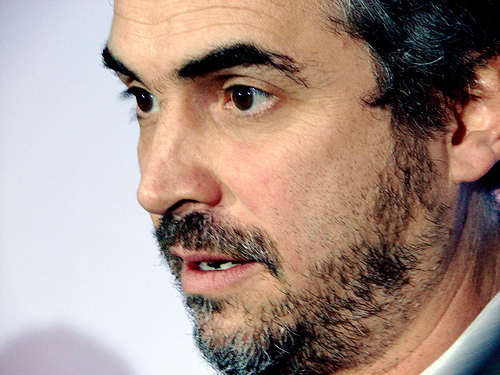
There are films that capture a moment, and then there are films that capture a future that, terrifyingly, becomes our present. Alfonso Cuarón’s Children of Men, released in 2006, falls squarely into the latter category. Two decades on, it has shed none of its chilling power; if anything, its grim vision of a collapsing world grappling with mass infertility and a global refugee crisis feels less like a dystopian prediction and more like an urgent, unblinking mirror held up to our own precarious reality. I revisit this film often, not just for its unparalleled craft, but because it feels more essential with every passing year.
The Unblinking Eye of Omero
The brilliance of Children of Men isn't solely in its narrative; it's in the harrowing, immersive way that narrative is delivered. Cuarón and cinematographer Emmanuel Lubezki redefined what "immersive" meant with their audacious, breathtaking long takes. Forget the digital trickery of many modern blockbusters; the car ambush scene, a single uninterrupted shot clocking in at nearly four minutes, remains a masterclass in controlled chaos and visceral tension. It’s an act of directorial bravado, certainly, but also a profound commitment to putting the viewer directly into Theo Faron’s desperate journey. Lubezki’s hand-held camera isn't just following; it's living and breathing with the characters, forcing us to witness every brutal detail. This isn't just good filmmaking; it's a statement about the act of seeing, the burden of bearing witness. It's a direct lineage to techniques you might find in a deep cut from Robert Altman or, in its sheer demand for audience engagement, even something like Hitchcock’s Rear Window (1954) through a lens of active participation.
A World Too Real
What truly elevates Children of Men beyond a mere dystopian thriller is its uncanny prescience. The film depicts a global population ravaged by inexplicable infertility, leading to societal breakdown, rampant nationalism, and a brutal, dehumanizing response to waves of refugees seeking asylum. While our reality hasn't (yet) faced universal infertility, the parallels to our ongoing climate migration crises, the rise of nativist politics, and the systematic marginalization of those fleeing conflict and desperation are impossible to ignore. Cuarón paints a portrait of a near-future that’s devoid of clean lines, full of discarded humanity, where hope is a commodity more precious than any weapon. It’s a vision so meticulously rendered, from the decaying infrastructure to the omnipresent propaganda, that it often feels like documentary rather than fiction. This is where the film excels in presenting my primary interest: the characters and their interactions through the timeline of the piece. The ordinary people caught in extraordinary circumstances, forced to make impossible choices, reveal the true cost of such a future.
Theo's Reluctant Redemption
Clive Owen's performance as Theo Faron is the weary, cynical heart of this nightmare. He's not a hero; he's a bureaucrat, a man defeated by his past and indifferent to the future. Yet, his reluctant entanglement with Kee (Clare-Hope Ashitey), a pregnant refugee, slowly peels back layers of his hardened cynicism. It's a testament to powerful character development that Theo, initially passive, transforms into an active, self-sacrificing figure, driven not by ideology but by a primal instinct to protect the last flicker of humanity. This transformation, catalyzed by the profound implications of Kee's impossible pregnancy, is what anchors the film’s narrative amidst its relentless despair. It’s a journey from resignation to fierce, desperate hope, a potent reminder that even in the bleakest circumstances, the human spirit, however battered, can find a reason to fight. This nuanced portrayal of human interaction against the backdrop of societal collapse is exactly what I mean when I talk about films that truly understand their characters.
Children of Men isn't an easy watch, nor should it be. It's a film that demands your attention, rewards it with unparalleled cinematic craftsmanship, and then haunts you with its prophetic vision. As we stand in 2026, two decades after its release, it’s clear that Cuarón didn't just make a great science fiction film; he made a profound statement about resilience, empathy, and the precariousness of hope. It doesn't offer easy answers, but it forces crucial questions, making it not just a masterpiece of its genre, but a vital piece of cinematic history that we ignore at our peril.

![Outlander: Seasons 1–5 [Blu-ray]](https://m.media-amazon.com/images/I/71tlWlGdBpL._SL1001_.jpg)


