
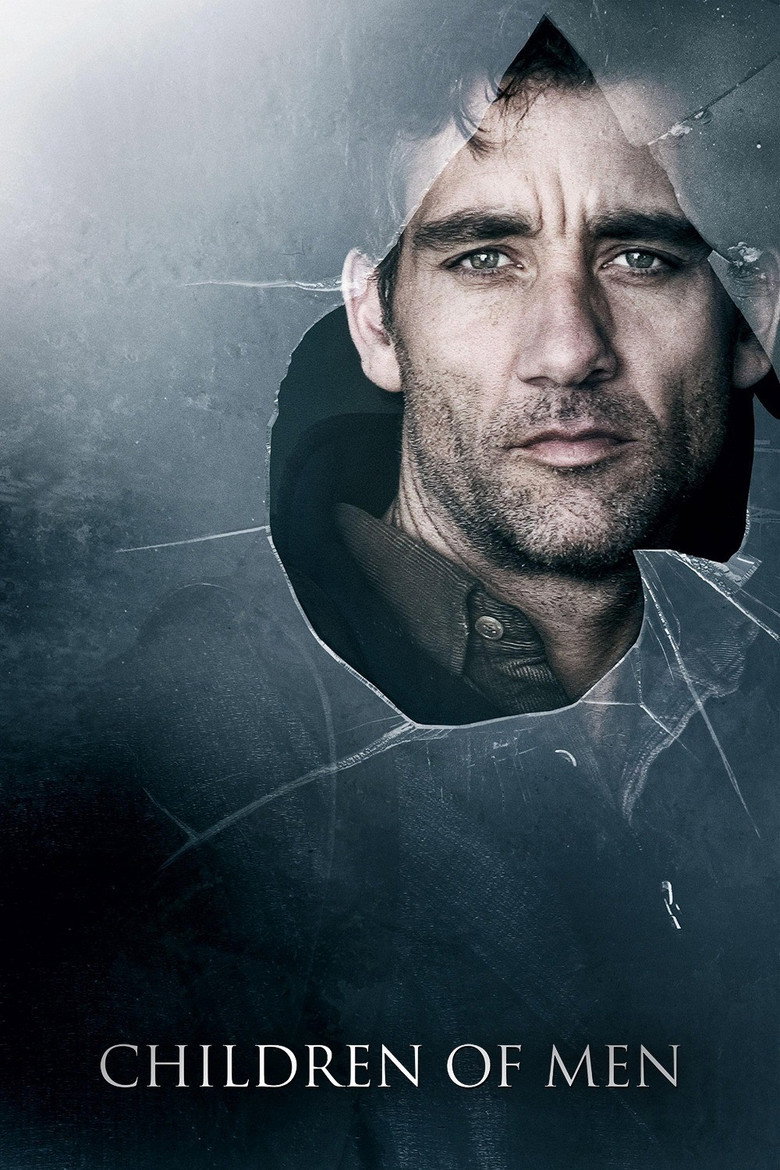
When Children of Men arrived in 2006, it was immediately hailed as a technical marvel and a grim, prescient vision of the future. Two decades later, its power hasn't diminished; if anything, its grim prognosis feels even closer to our door. Alfonso Cuarón’s masterpiece isn’t just a great film; it’s a necessary one, a cinematic crucible that forces us to confront the bleakest outcomes of human indifference and, crucially, to recognize the stubborn, fragile spark of hope that persists.
I remember sitting in the theater on first viewing, utterly floored by the ambition and the execution. Pauline Kael famously said, “Movies are so rarely great art that if we can't appreciate great trash, we have nothing.” Well, Children of Men manages to be great art that feels as visceral and immediate as the most gripping thriller, transcending any easy categorization. Its genius lies in creating a future so recognizably ours, yet so chillingly desolate, all without ever resorting to exposition dumps or heavy-handed pronouncements.
A Future Uncomfortably Close
The premise of Children of Men is devastatingly simple: for eighteen years, no child has been born. Humanity is sterile, dying out. This global infertility crisis serves as a terrifying backdrop for a world teetering on the edge of complete societal collapse. Governments have become totalitarian, borders are militarized, and millions of refugees are caged like animals. It’s a vision of unchecked nativism, environmental decay, and political corruption that feels less like science fiction and more like a logical extension of our current headlines.
What distinguishes Cuarón’s approach here, compared to so many other dystopian visions, is the lived-in quality of its despair. There are no soaring speeches about the human condition; instead, the film grounds itself in the weary, cynical eyes of Theo Faron, played with exquisite understatement by Clive Owen. He’s a man who has given up, content to drift through the ruins. His journey, reluctantly spurred by his former revolutionary wife Julian (Julianne Moore), to protect the world’s last pregnant woman, Kee (Clare-Hope Ashitey), isn’t about grand heroism. It’s about a deeply personal, almost accidental rediscovery of purpose in a world that has lost all meaning.
The Immersive Brutality of Cuarón and Lubezki
One cannot discuss Children of Men without reverently mentioning the collaboration between Cuarón and his long-time cinematographer, Emmanuel Lubezki. Their work here is nothing short of revolutionary. Lubezki, who would go on to win three consecutive Academy Awards for his work on Gravity, Birdman or (The Unexpected Virtue of Ignorance), and The Revenant, redefined what long takes could achieve. Here, they're not merely technical feats; they are narrative and emotional engines, designed to drop the viewer directly into the heart of the chaos.
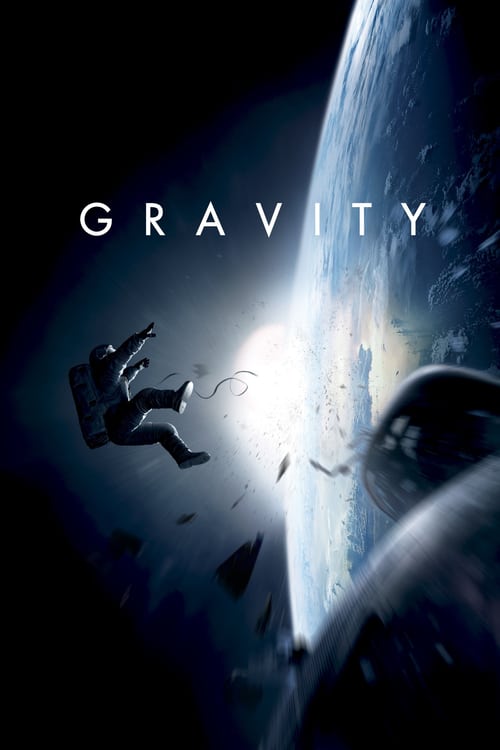
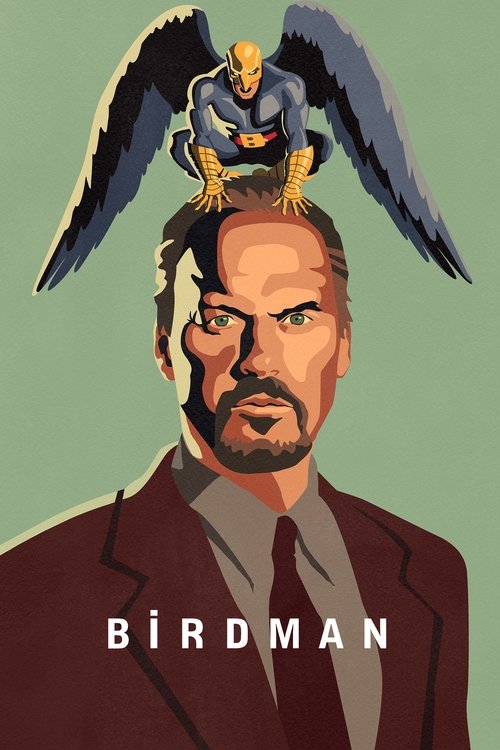
Consider the infamous single-take car ambush, a masterclass in choreographed mayhem. We’re trapped inside that vehicle with Theo, the camera moving frantically, reacting to every bullet and explosion. Then there’s the unbroken, horrifying sequence through the Bexhill refugee camp, a ten-minute ballet of sustained tension and brutal, unflinching realism. These aren’t just cool camera tricks; they are immersive storytelling decisions that refuse to let the audience disengage. Roger Ebert, with his usual incisiveness, called it a “visceral, immediate experience.” It is, and it puts many contemporary action films that rely on quick cuts and shaky-cam to shame.
A Glimmer, Not a Promise
Despite the overwhelming bleakness, Children of Men isn't a film without hope. But its hope is fragile, hard-won, and deeply ambiguous. The birth of Kee’s baby isn’t a magical solution, but rather a catalyst for a moment of profound, shared humanity amidst the carnage. The unforgettable scene where warring factions in Bexhill cease fire, briefly mesmerized by the cries of the newborn, speaks volumes about our inherent capacity for empathy, even in the darkest corners of our nature. It's a reminder that even when all seems lost, the arrival of new life can pierce through the cynicism, if only for a moment.
This film is a stark reminder that true cinematic impact often comes from unflinching engagement with the real world, filtered through an artist’s unique vision. Cuarón, whom I’d admired since his earlier, more intimate films like Y Tu Mamá También, demonstrated here a mastery of scale and thematic depth that few filmmakers achieve. Children of Men doesn’t offer easy answers or saccharine resolutions. It presents a mirror to our own anxieties and challenges us to look closely. It forces us to ask: what would *we* do if hope was truly, literally, the last thing left?

As for its enduring legacy, Children of Men remains an essential watch, not just for its unparalleled craft, but for its courageous, empathetic, and still-alarming vision of a world that we may yet manage to avoid, or tragically, find ourselves living in.

![Outlander: Seasons 1–5 [Blu-ray]](https://m.media-amazon.com/images/I/71tlWlGdBpL._SL1001_.jpg)


